Lagoon of Seven Colors: why Bacalar has so many shades of blue
A simple explanation of Quintana Roo’s famous landscape: not seven literal colors, but a changing palette of blues and turquoise.
Quick answer
The Lagoon of Seven Colors does not have seven literal bands. Its blue and turquoise tones come from depth, a light bottom, clear water and daylight.
Location
Bacalar, Quintana Roo, Mexico
Read time
6 min read
Reviewed by the local Tours Bacalar team
In this guide (8 temas)▼
Are there really seven colors?
Do not expect a red band, a yellow band, and a green band. “Lagoon of Seven Colors” is a popular name for a visual effect: transparent blue, turquoise, aquamarine and deep blue appear in the same view. Seven is not an exact count; it is a poetic way to describe the many shades of blue seen best on a clear day.
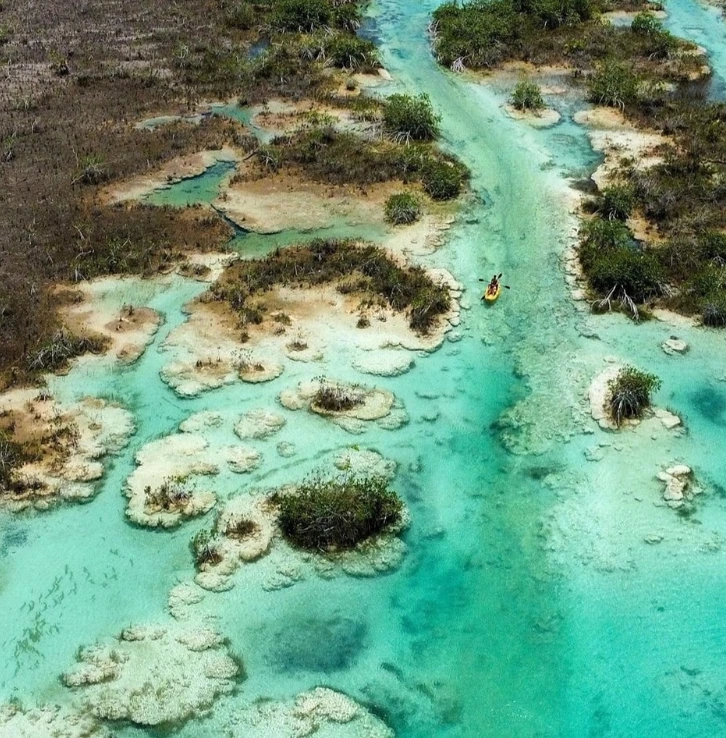
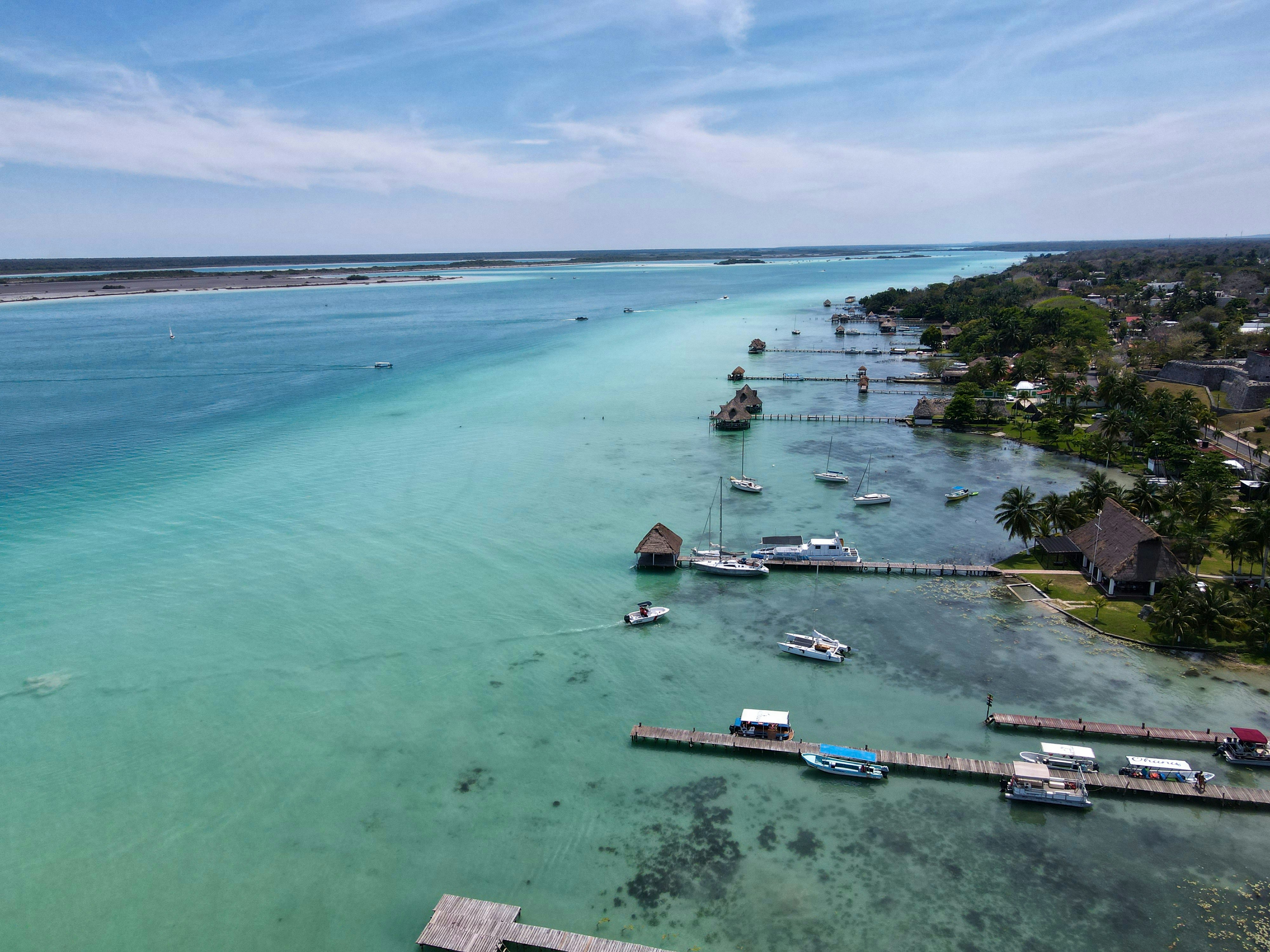
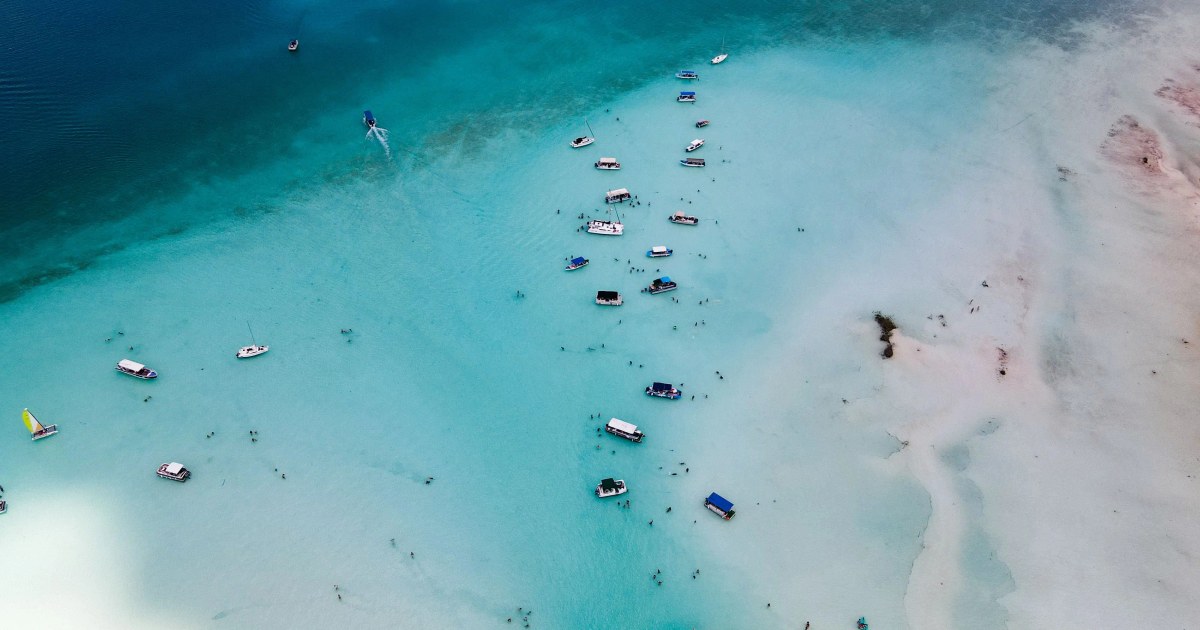
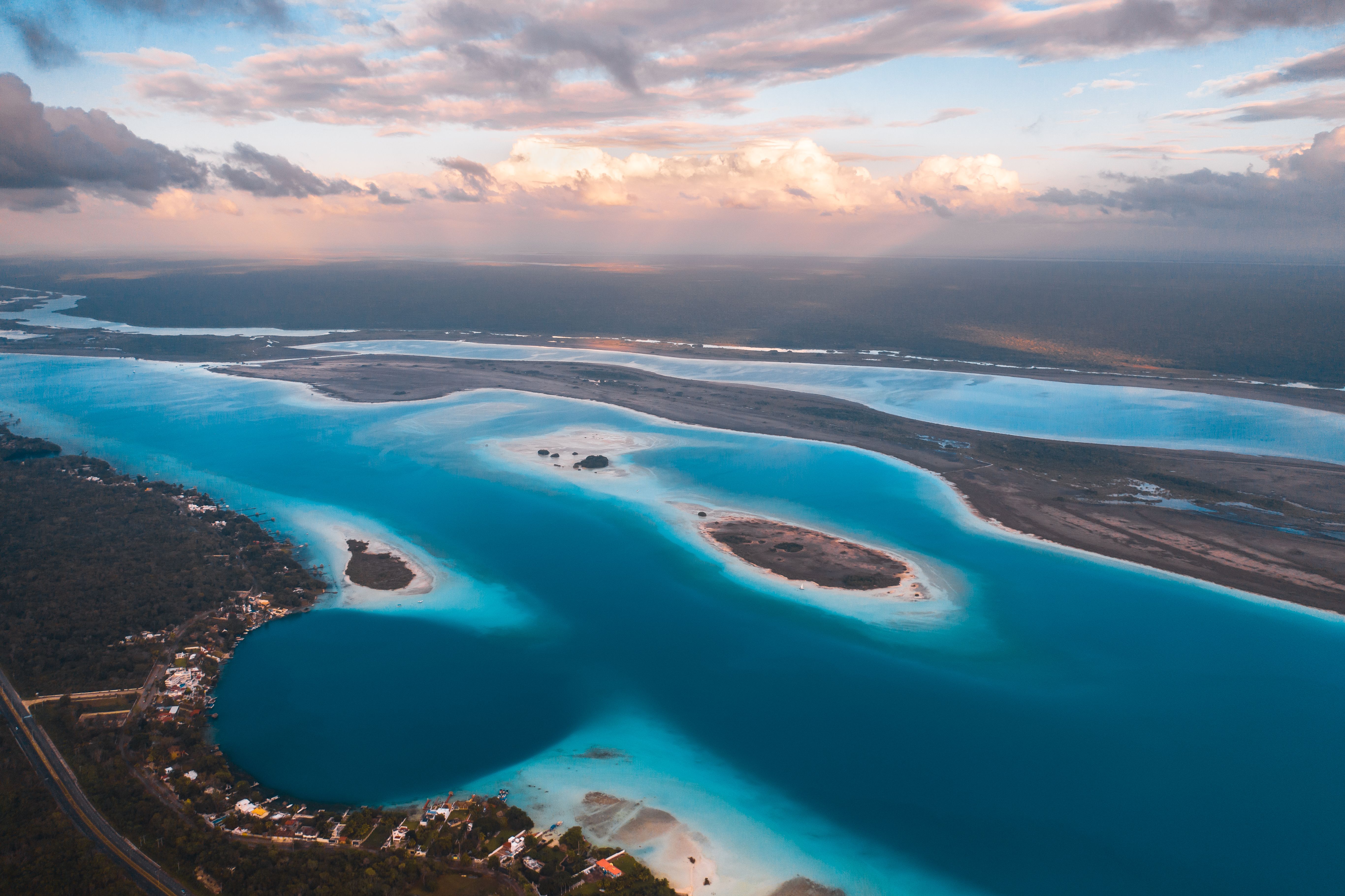
The Lagoon of Seven Colors from above
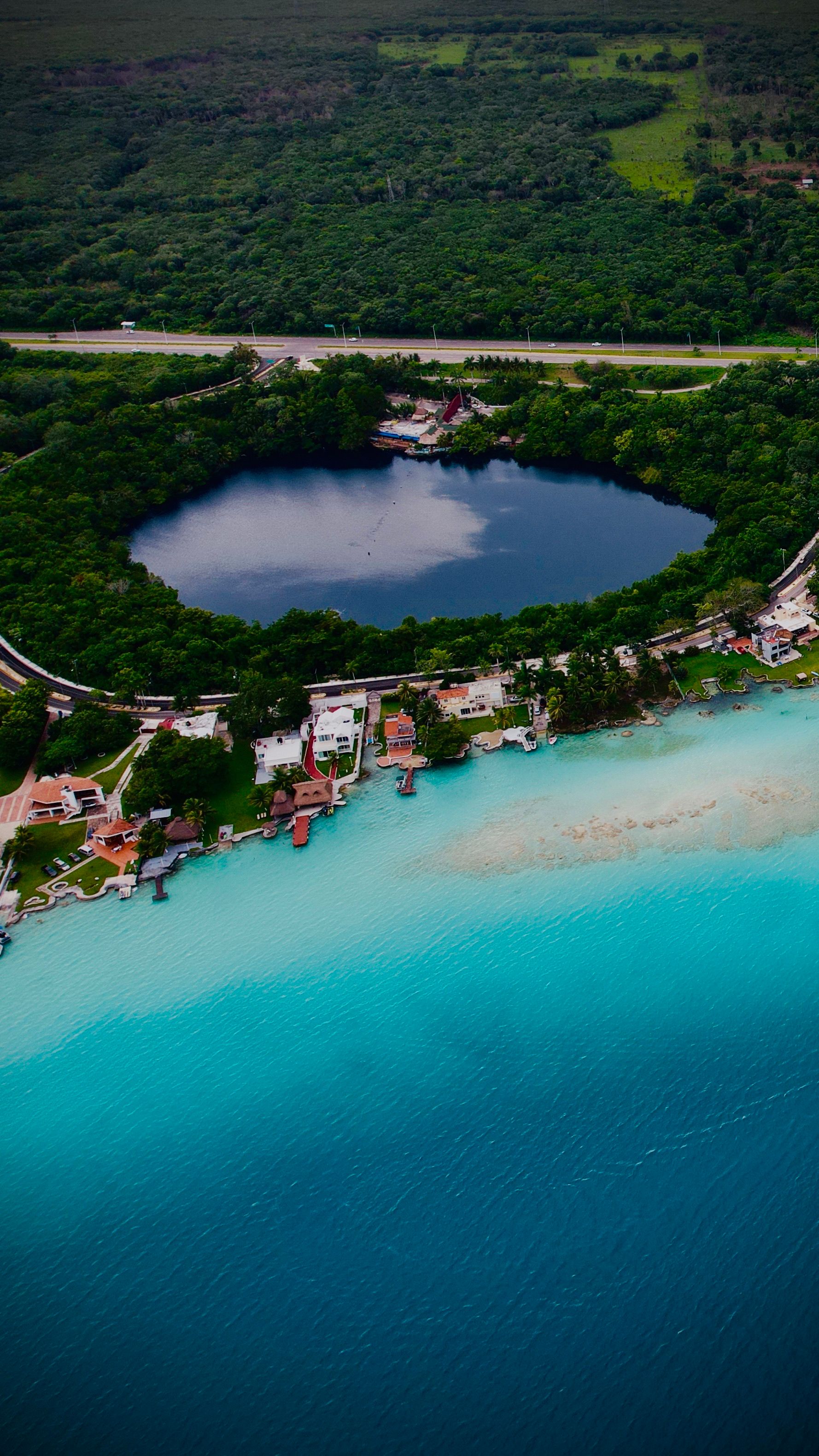
The aerial view turns the lagoon into a readable map: pale shallows reflect more light, while deeper areas take on darker blue tones.
Lagoon route: stops 1 to 4
The lagoon is not a single stop. Begin with these contrasts of depth, living nature and scenery.
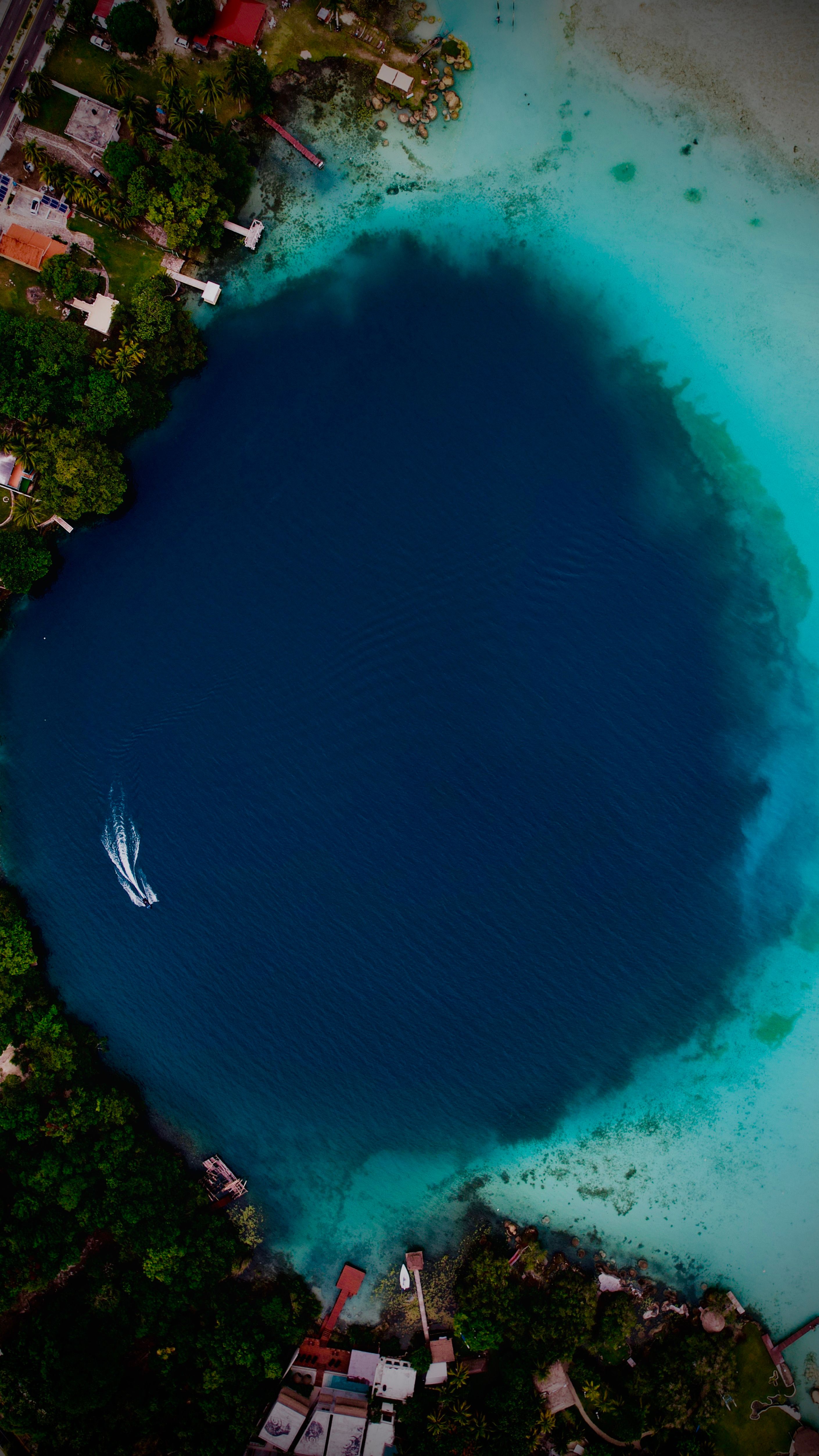
Cenote Negro
One of the deepest-blue areas, where the sudden color change is easy to see from the water.
Read the place guide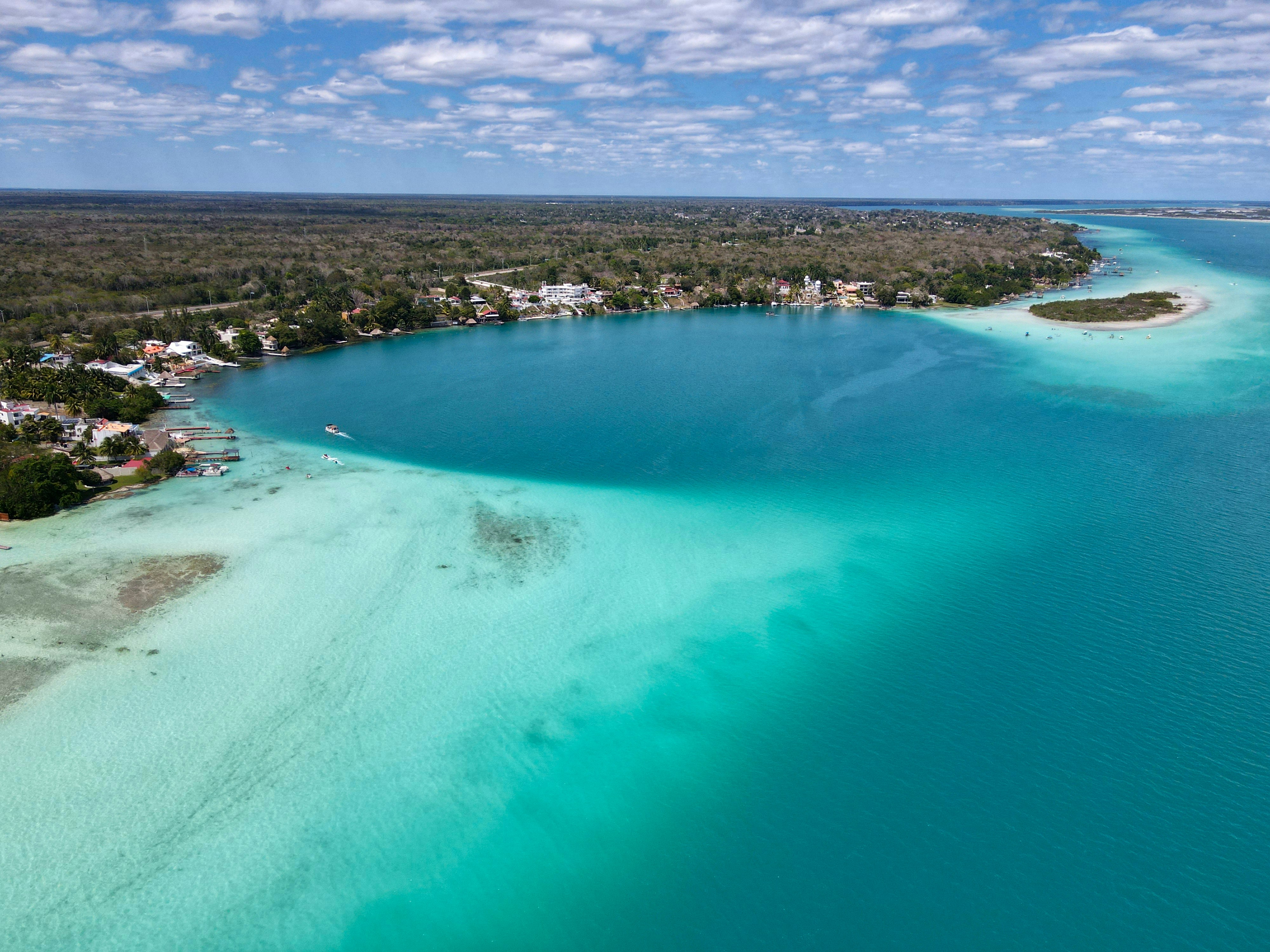
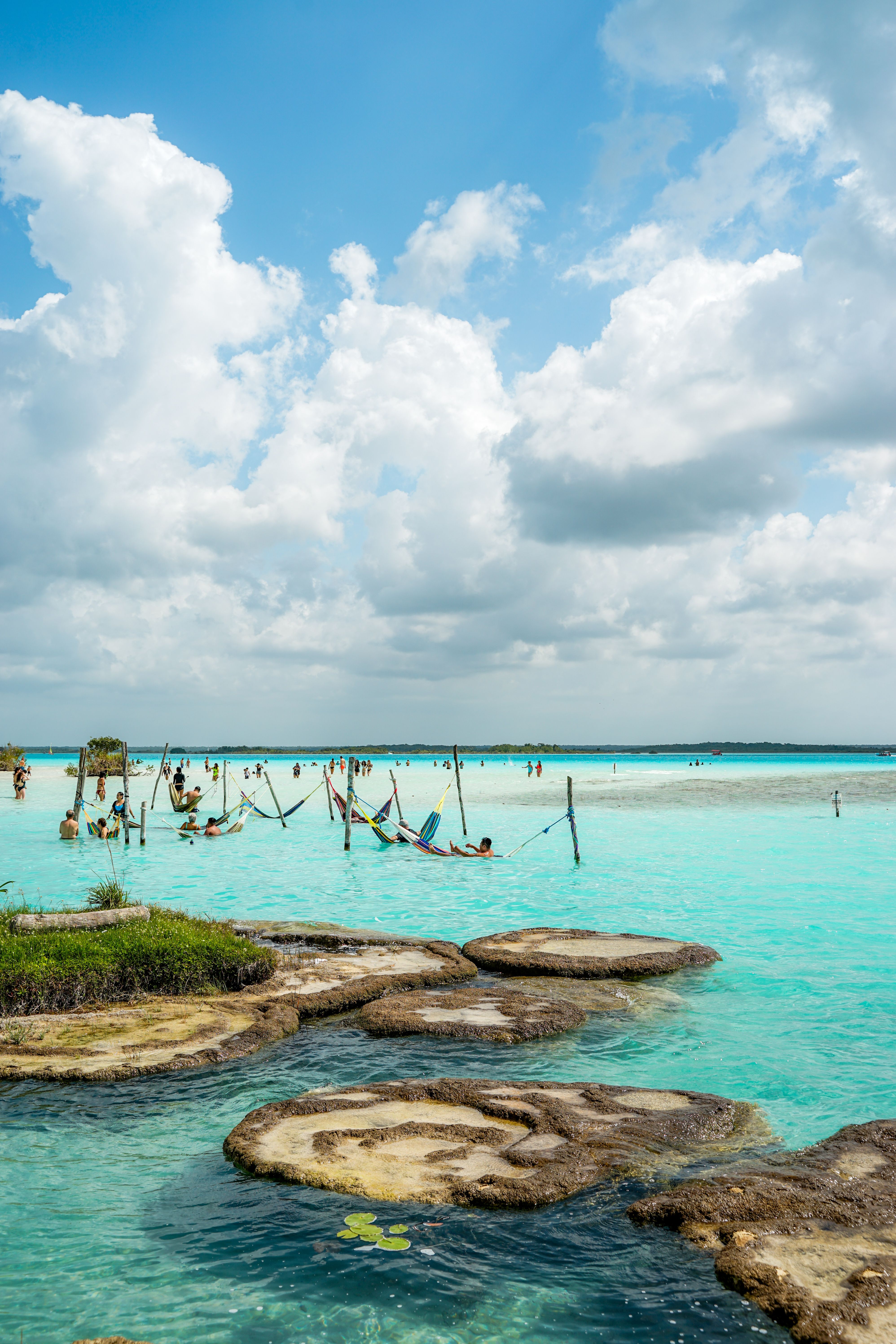
Cenote Esmeralda
A contrast of clear and deep water that helps explain Bacalar’s palette.
Cenote Cocalitos
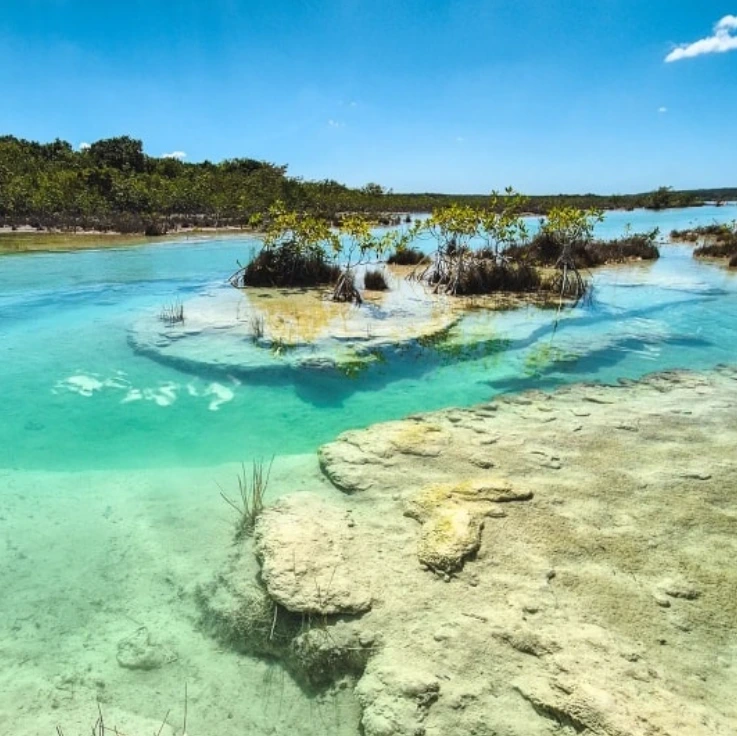
Known for stromatolites; observe them without touching or stepping on them.
Read the place guide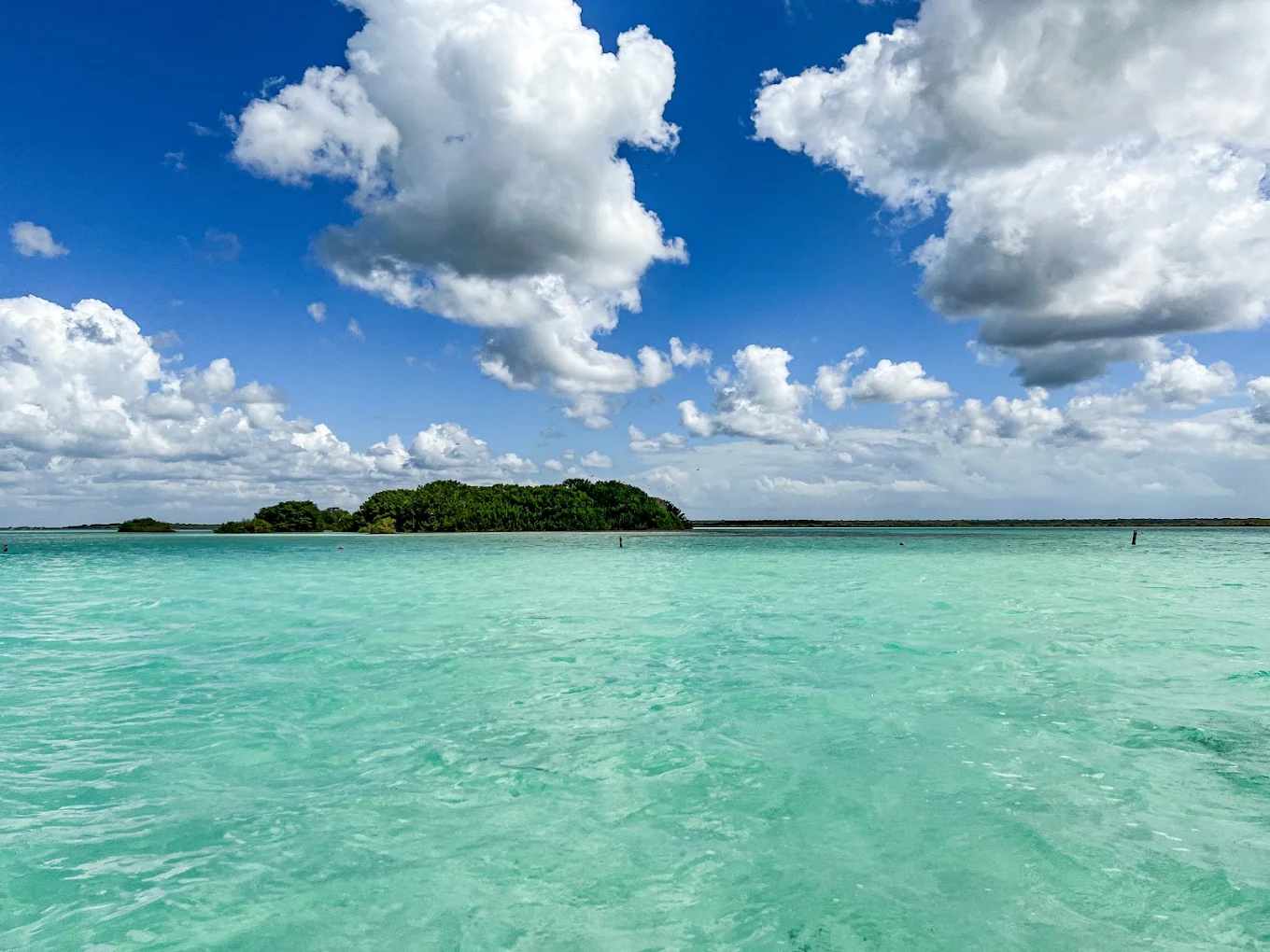
Bird Island
A scenic wildlife-viewing point best enjoyed from a respectful distance.
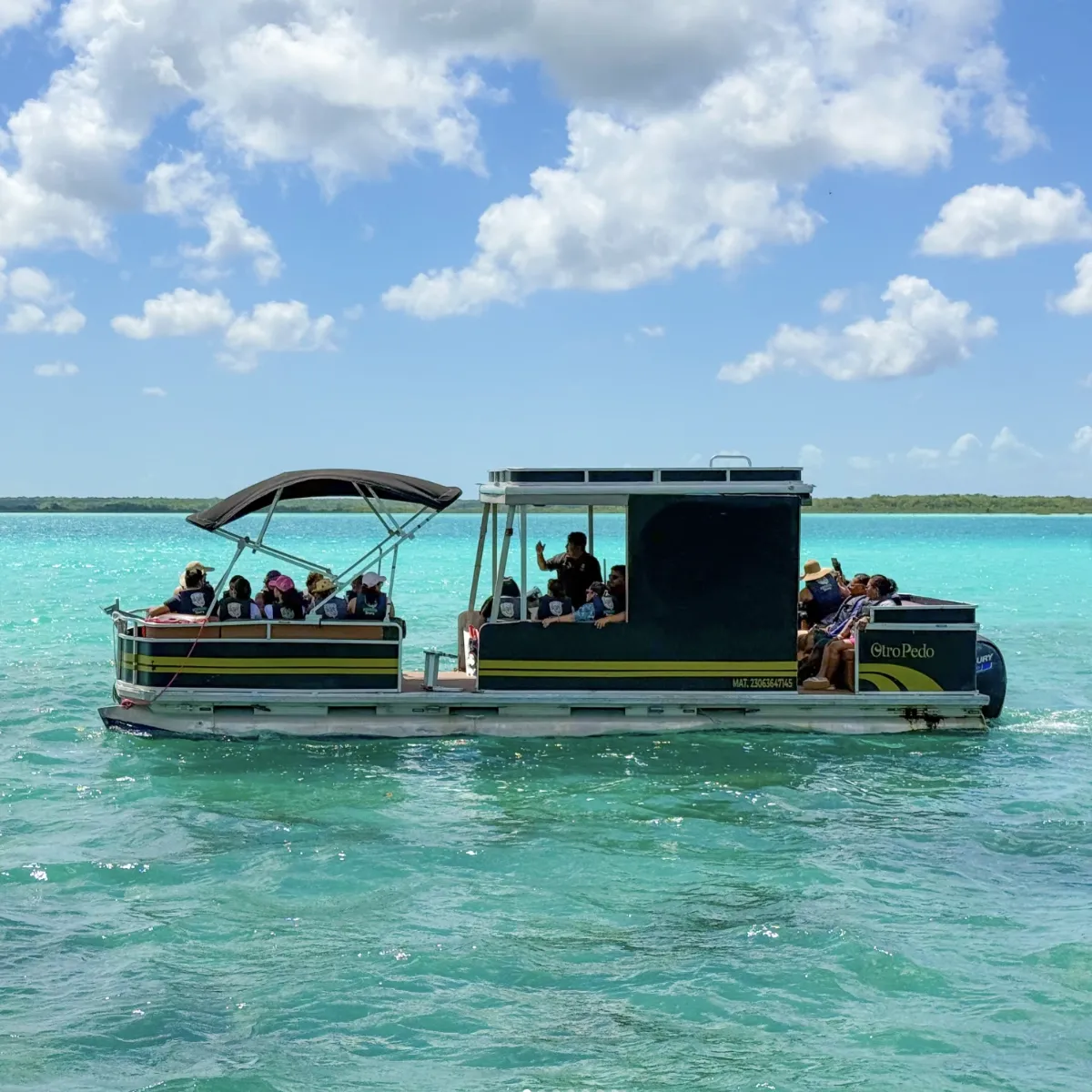
Read the place guidePirates Channel from the Pontoon Boat
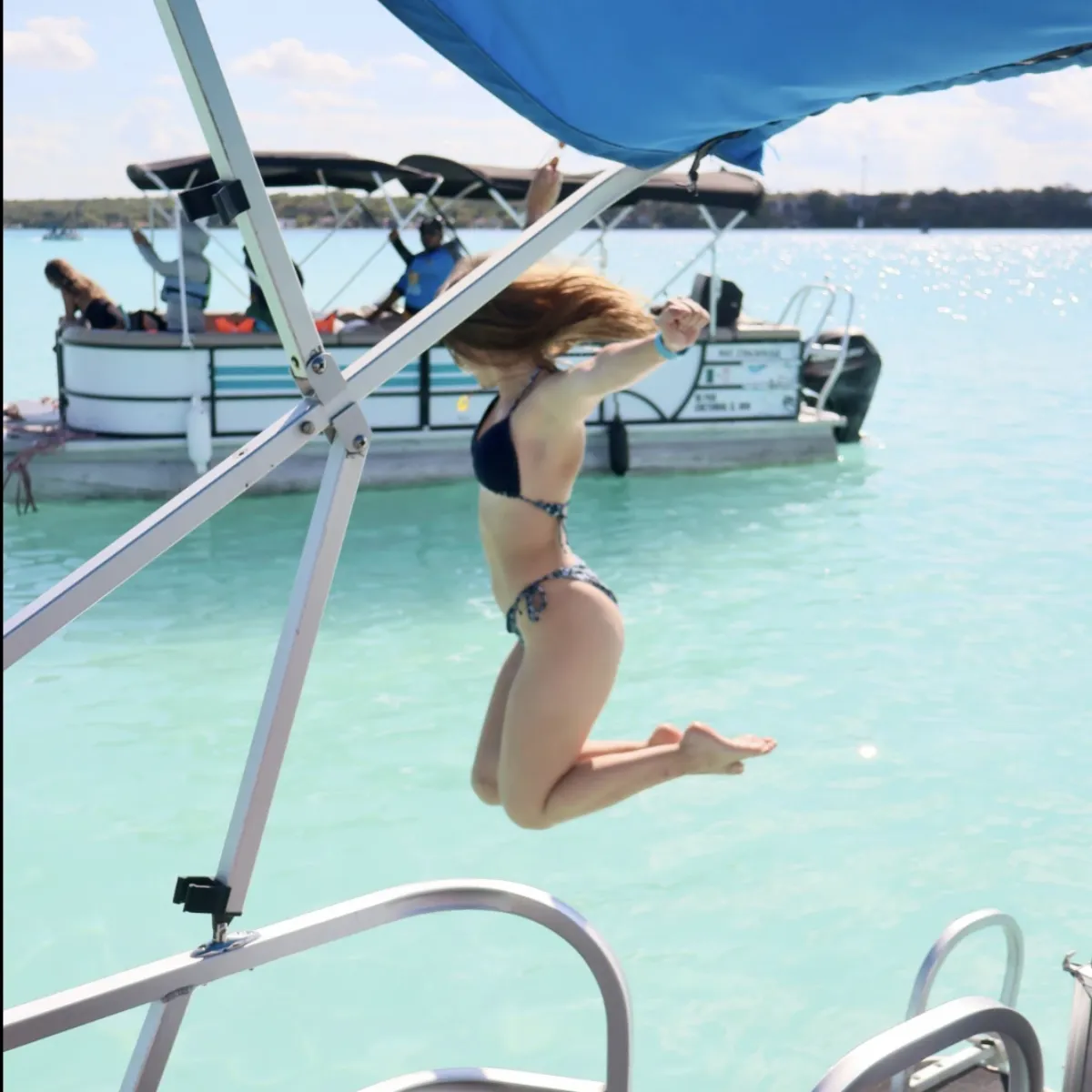
Pontoon cruise into the turquoise shallows of Pirates Channel. Starting onboard with the captain and rising into the air to reveal the pale sandy bottom.
Lagoon route: stops 5 to 7
Continue toward clear water, historic corners and gentle currents.
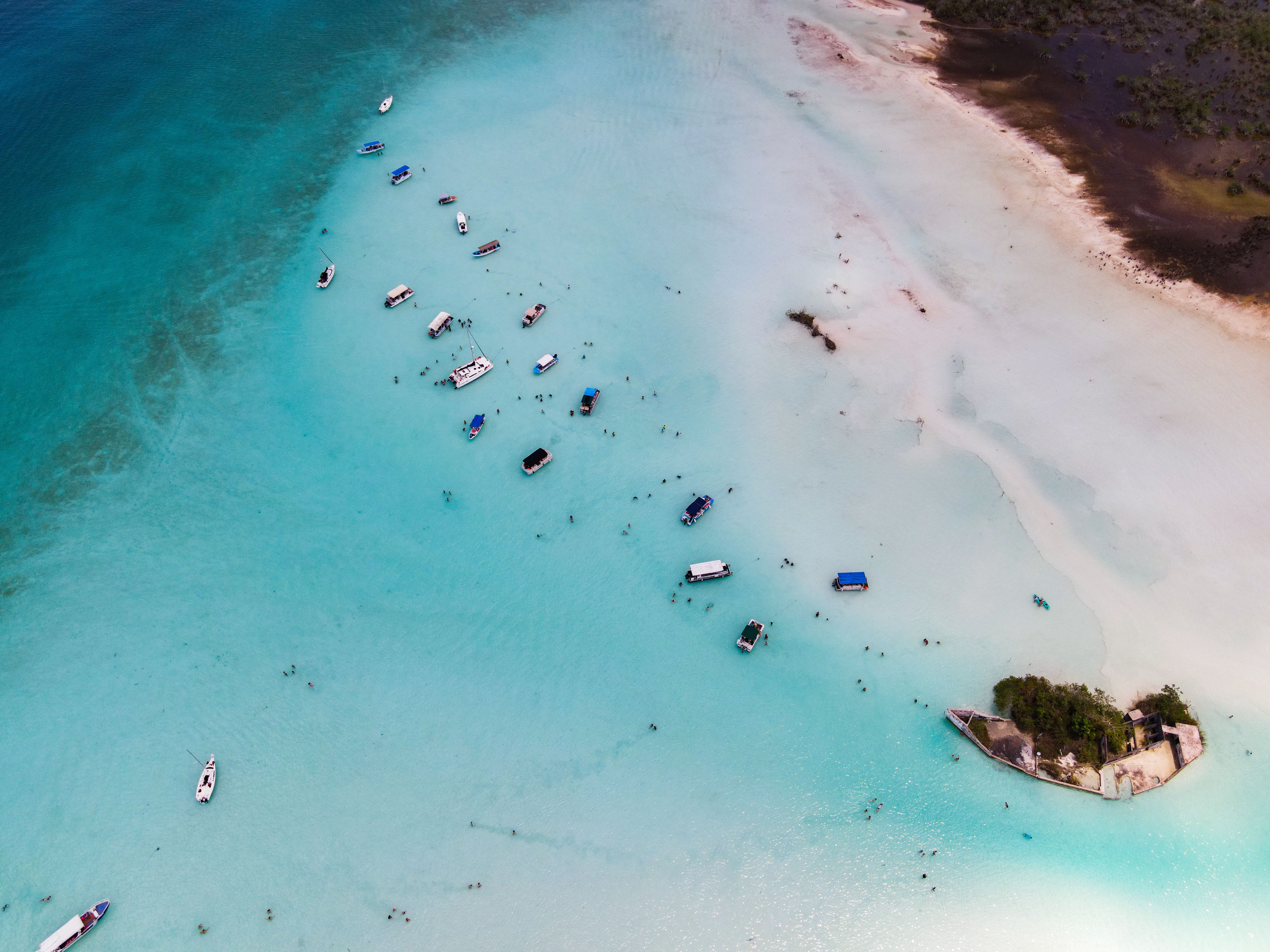
Pirates Channel
A historic channel with shallow water and pale tones that reveal the bottom.
Read the place guide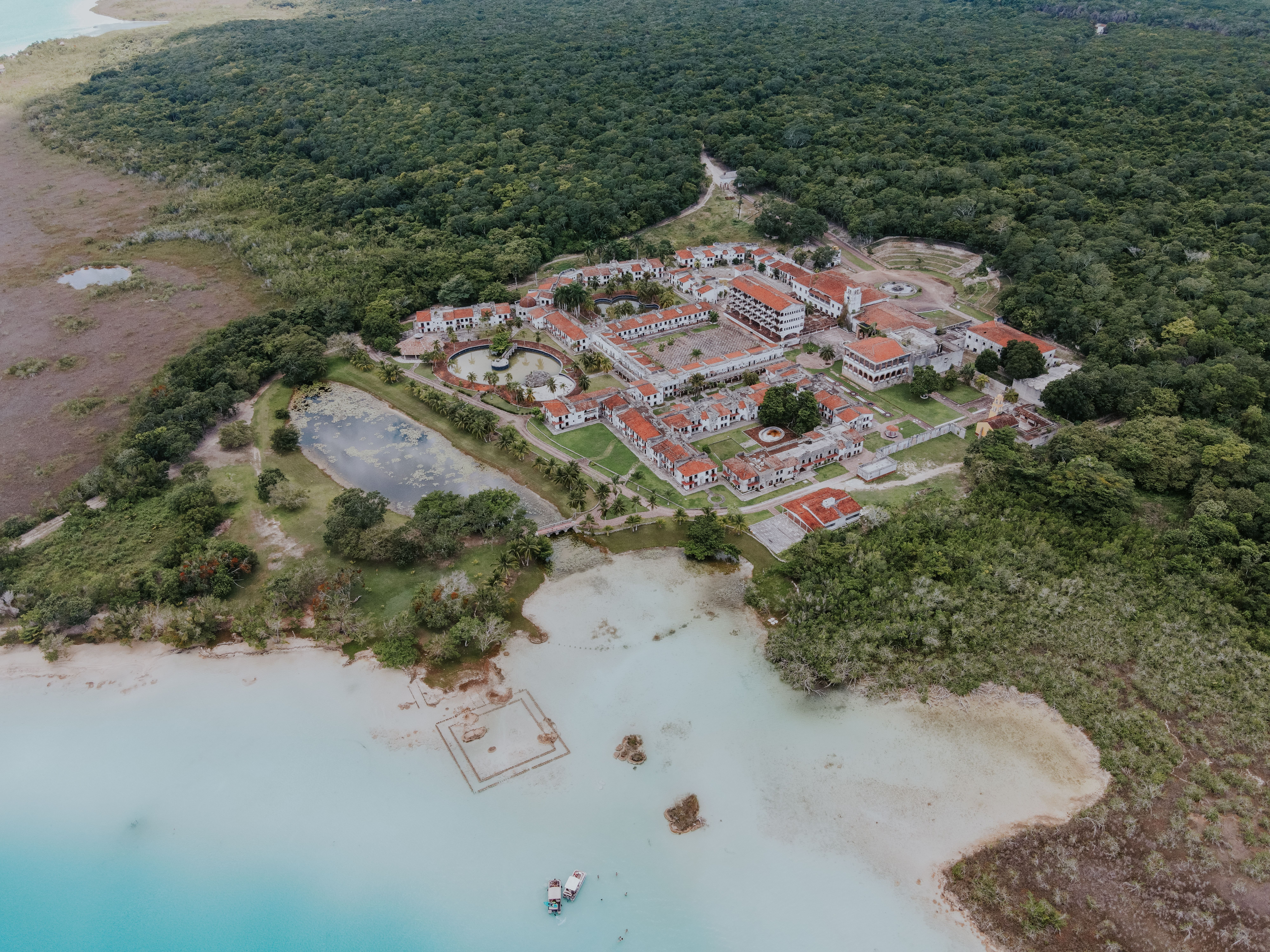
Abandoned Hotel
A curious landmark many boat tours point out from the water.
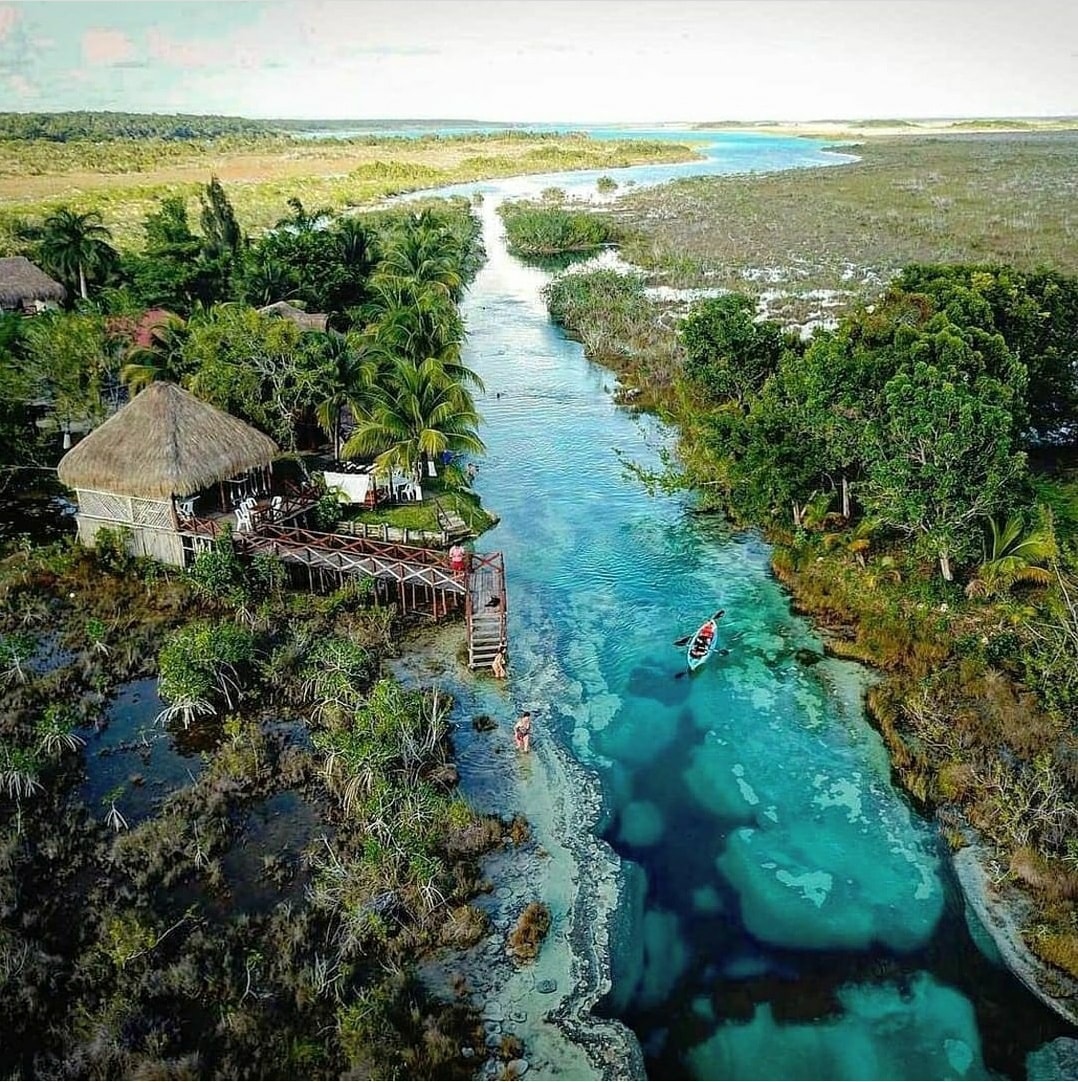
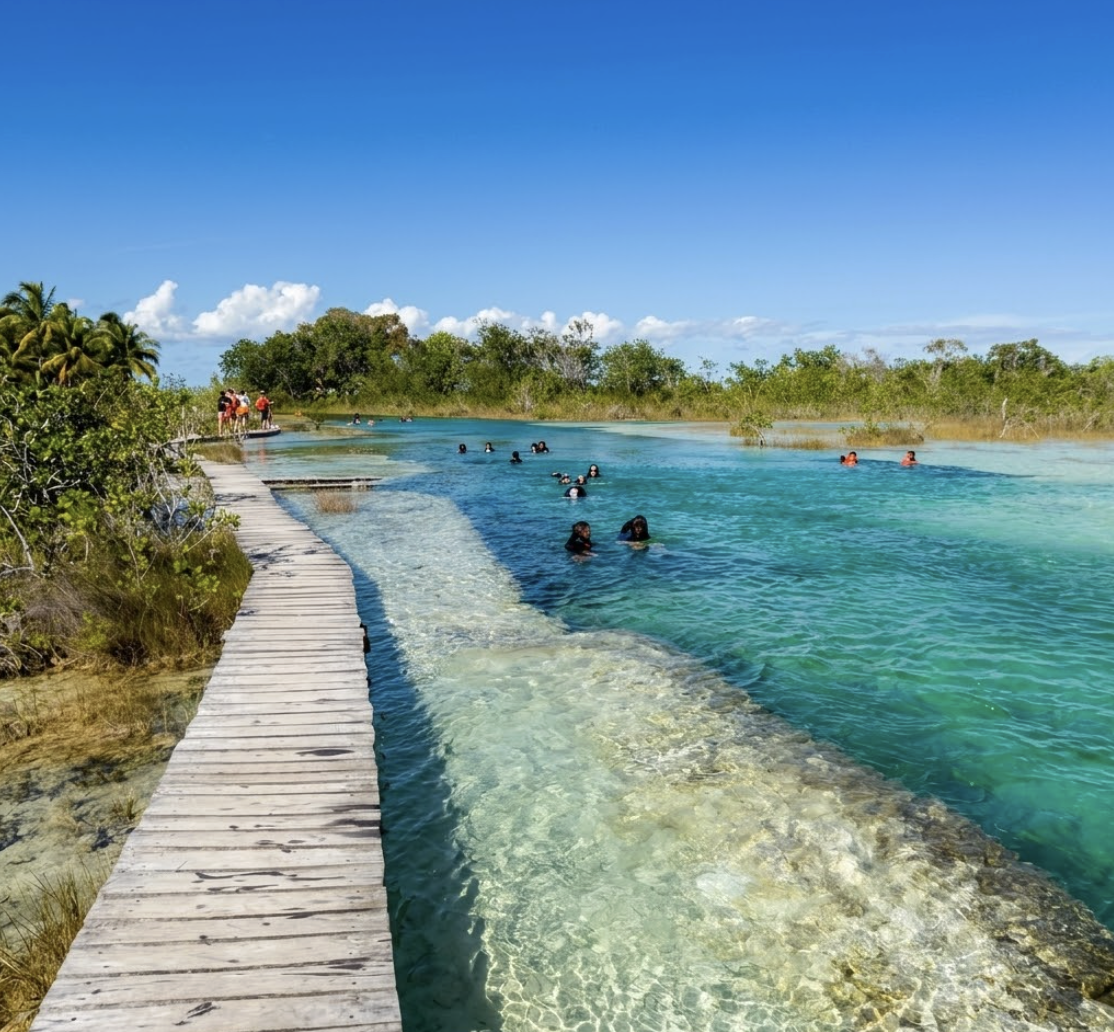
Bacalar Rapids
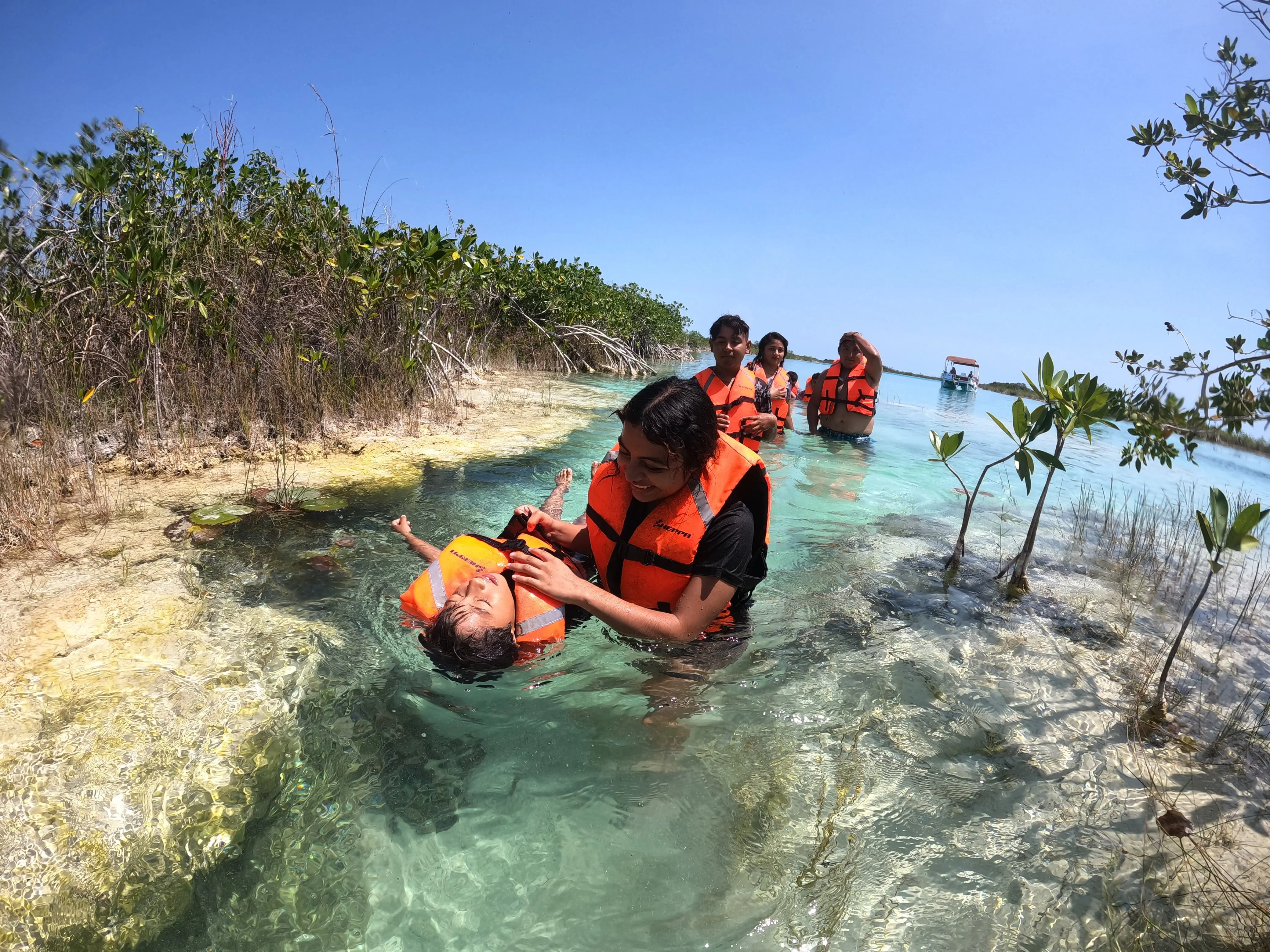
A gentle-current channel with stromatolites; enjoy it without touching formations.
Read the place guide1. Depth paints the map
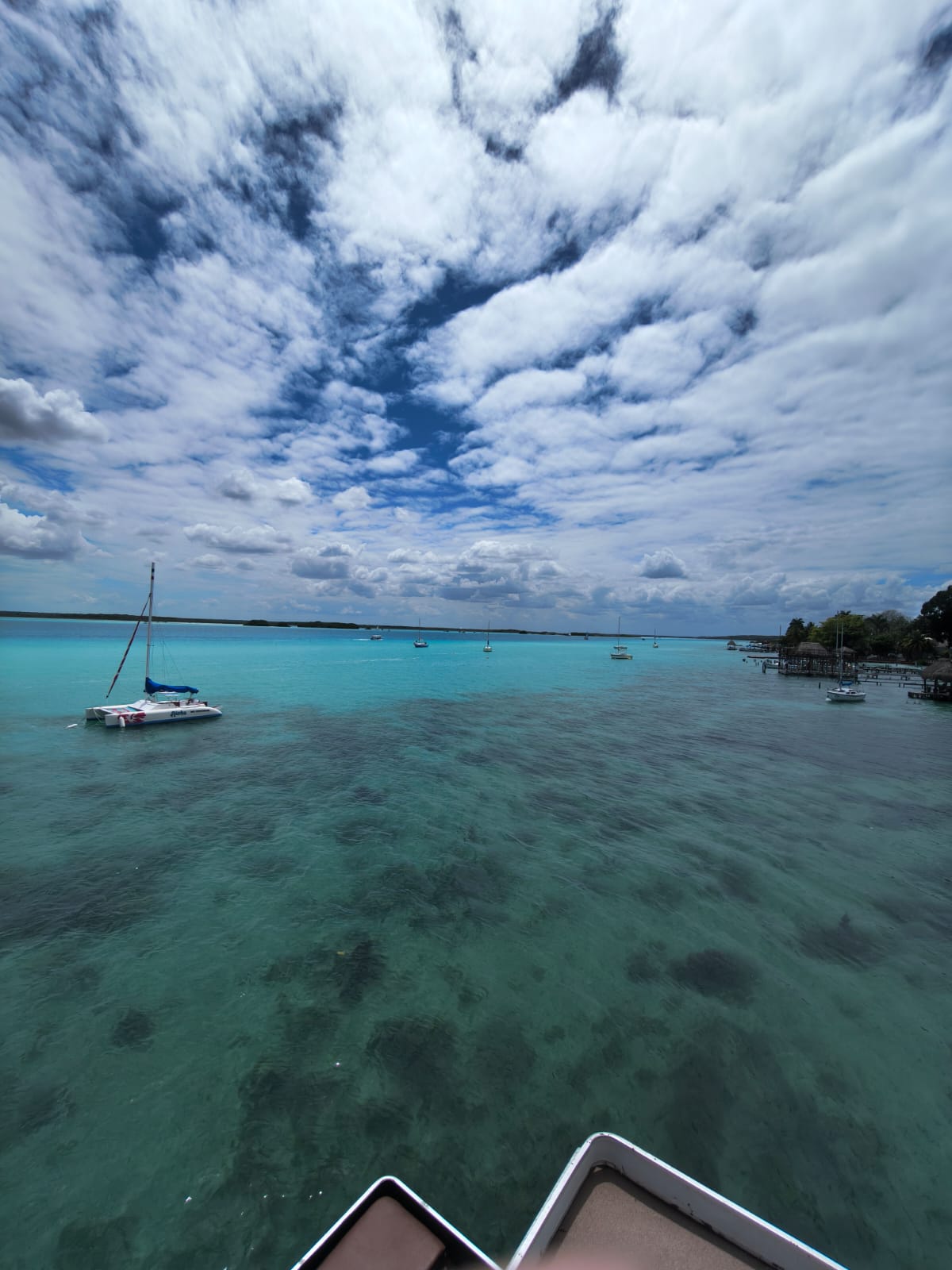
Shallow areas reveal the pale bottom and look bright. Where the bottom drops suddenly, especially near submerged cenotes, water absorbs more light and looks navy blue. That contrast creates the patches of color visible from a dock or boat.
2. White sand reflects light
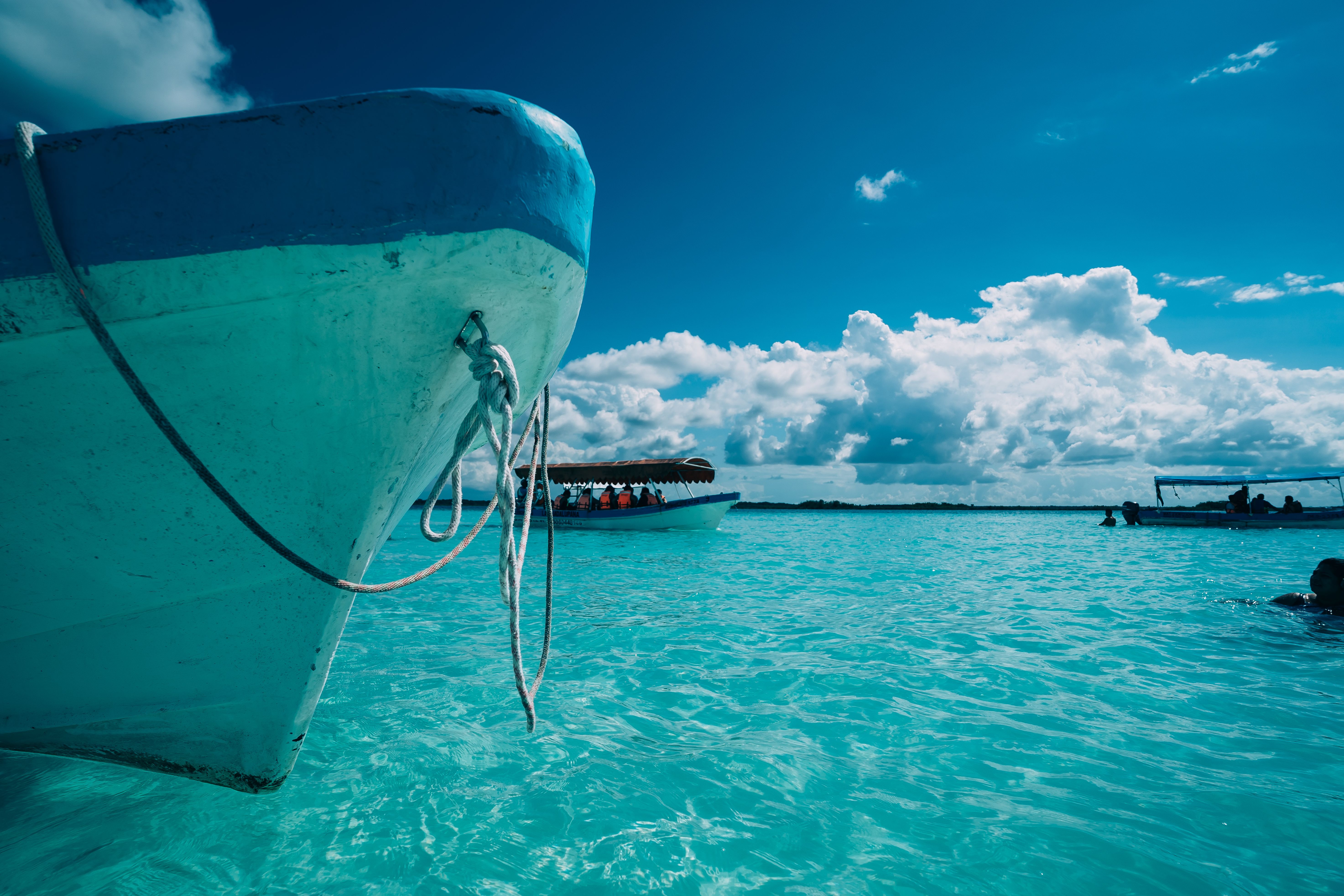
Much of the lagoon has pale limestone sediment and fine white sand. Sunlight reaches that bottom and bounces upward, making the shallows glow turquoise. It is not paint or a filter: it is clear water, sunlight and a light-colored bottom.
3. Sunlight changes the show
The palette changes through the day. High sun and clear skies usually create the strongest contrast; clouds, wind and rain soften it. For the best view, choose calm water and daylight from late morning to midday.
4. Cenotes and filtered water
Bacalar belongs to a limestone landscape with groundwater and cenotes. Deep areas such as Cenote Negro, Esmeralda and Cocalitos create sudden changes in the bottom, which is exactly why light blue turns into deep blue.
See it and protect it
The lagoon is fragile. Enjoying it responsibly helps preserve its clarity.
Best conditions
Pick a clear, calm day. From a boat, the depth changes are much easier to understand than from one shoreline.
Protect what you see
Do not step on stromatolites or leave waste. Choose UV-protective clothing and follow the rules at each access point or from your guide before entering the water.
Bacalar’s oldest secret
- Stromatolites are living microbial communities, not decorative rocks.
- They depend on very special water conditions and can be harmed by touching or stepping on them.
- Observe from a distance and follow your guide’s instructions.
Frequently asked questions
Does Bacalar Lagoon literally have seven colors?
No. It is a popular name for different shades of blue and turquoise created by depth, a pale bottom, clear water and sunlight.
Why does part of the lagoon look dark blue?
It usually marks deeper water or a sudden drop in the bottom, such as near some cenotes. Deep water absorbs more light.
What is the best time to see the colors?
On a clear day, late morning and midday usually offer the strongest contrast. Clouds and wind make a big difference.
A natural palette, not a trick
The Lagoon of Seven Colors is a living map of light and depth. Exploring it respectfully is the best way to enjoy it and help it stay clear.
Sources and context
This guide combines local observation with official context on Bacalar and its stromatolites. Access rules can change, so always follow the guidance at each place or from your guide.