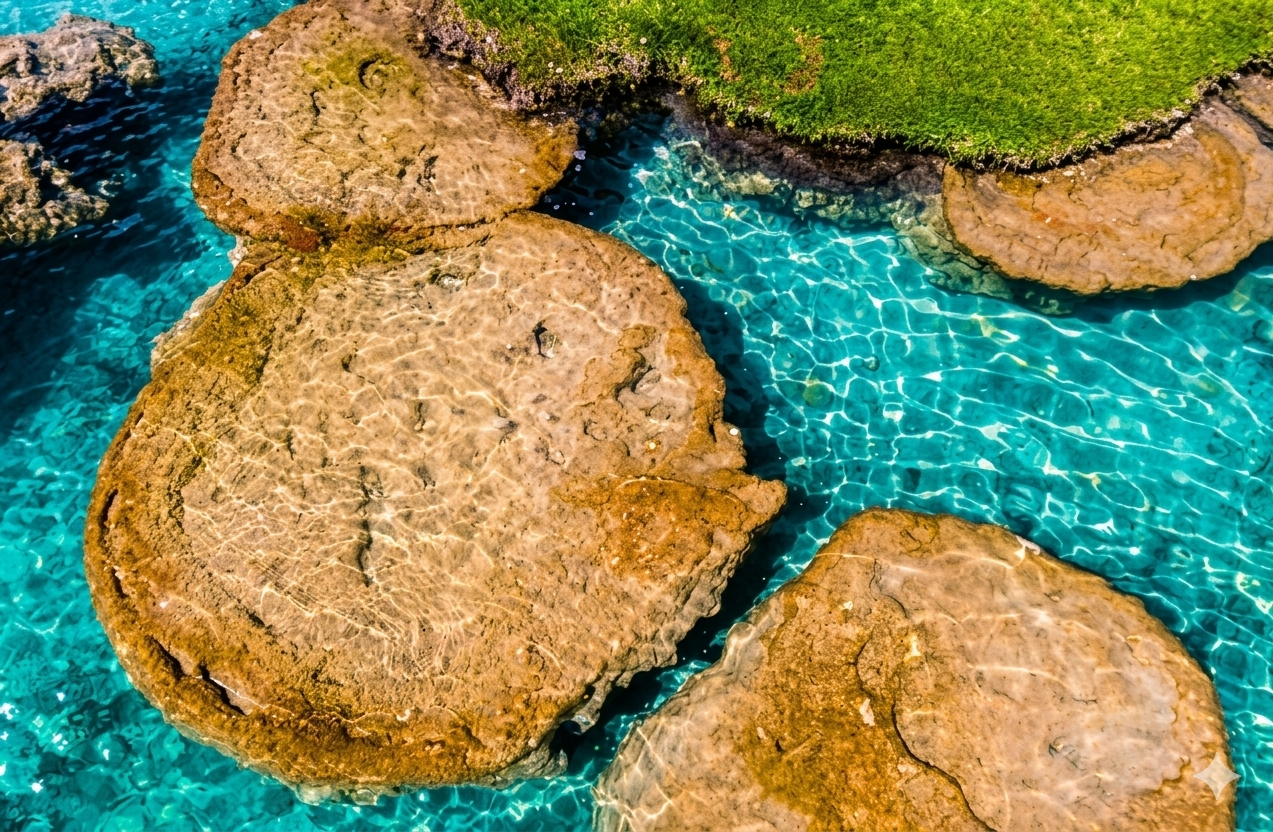
Stromatolite Sanctuary in Bacalar: The Origin of Life
Discover the 3.5-billion-year-old living organisms that generated Earth’s oxygen, where to see them in Bacalar and worldwide, and how to protect them.
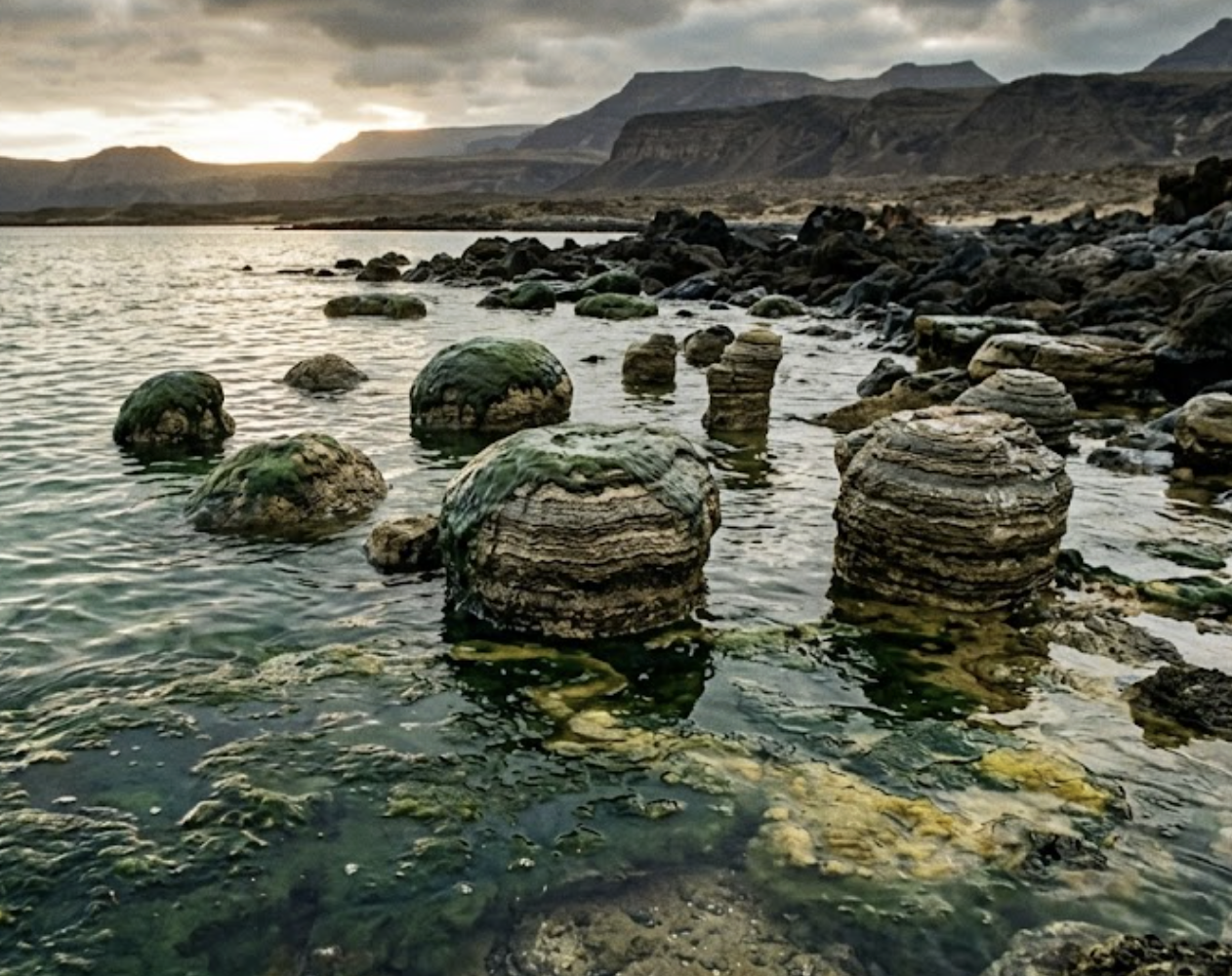
You are standing before one of the oldest and most fascinating wonders on the entire planet! Although they might look like common white rocks at the water's edge, stromatolites are actually living colonies of microorganisms that have been here for 3.5 billion years. Just imagine: these tiny organisms were here long before dinosaurs and even before plants!
Their role in history is nothing short of heroic: they were the first to perform photosynthesis and release oxygen into the atmosphere. Without their silent work over eons, life as we know it—you, me, and the fish in the lagoon—simply would not exist. They are, quite literally, the grandparents of the air we breathe. In Bacalar, we are incredibly lucky to host one of the few sanctuaries in the world where these structures are still alive and growing, millimeter by millimeter. Floating alongside them is like having a front-row seat to the dawn of life on Earth.
Interactive Map: Where to Find Stromatolites
Explore exact coordinates in Bacalar Lagoon and discover the rare global sanctuaries around the planet.
Iconic Stromatolite Spots in Bacalar
Inside the Lagoon of Seven Colors you can admire these living structures in 5 key locations. Click any spot to focus the map.
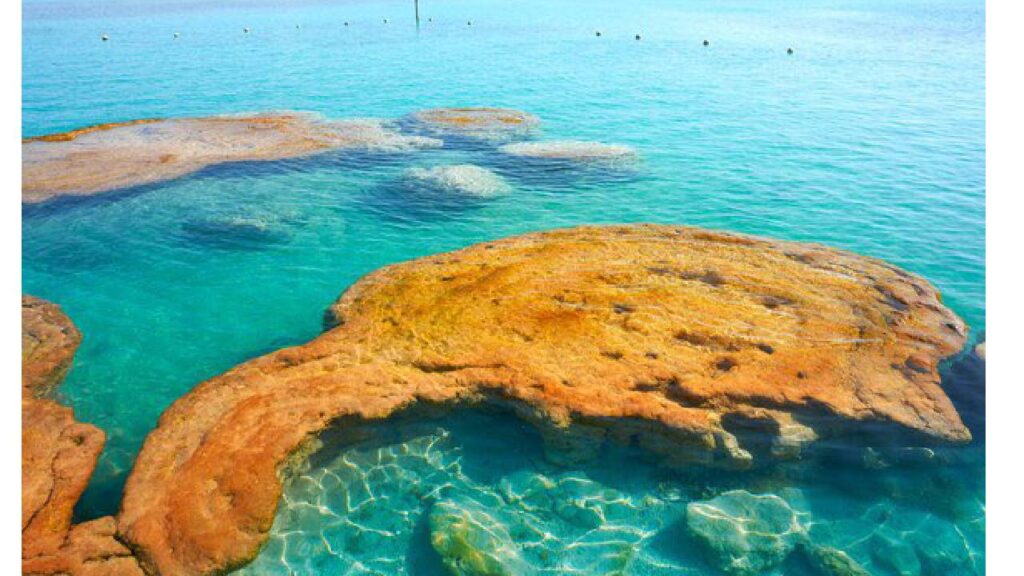
Cenote Cocalitos (The Sanctuary)
The sanctuary with the highest density of shallow-water stromatolites in Bacalar.
Known as the "Stromatolite Sanctuary", Cocalitos features dozens of rounded structures emerging from shallow crystal-clear waters. Ideal for close observation from designated wooden boardwalks.
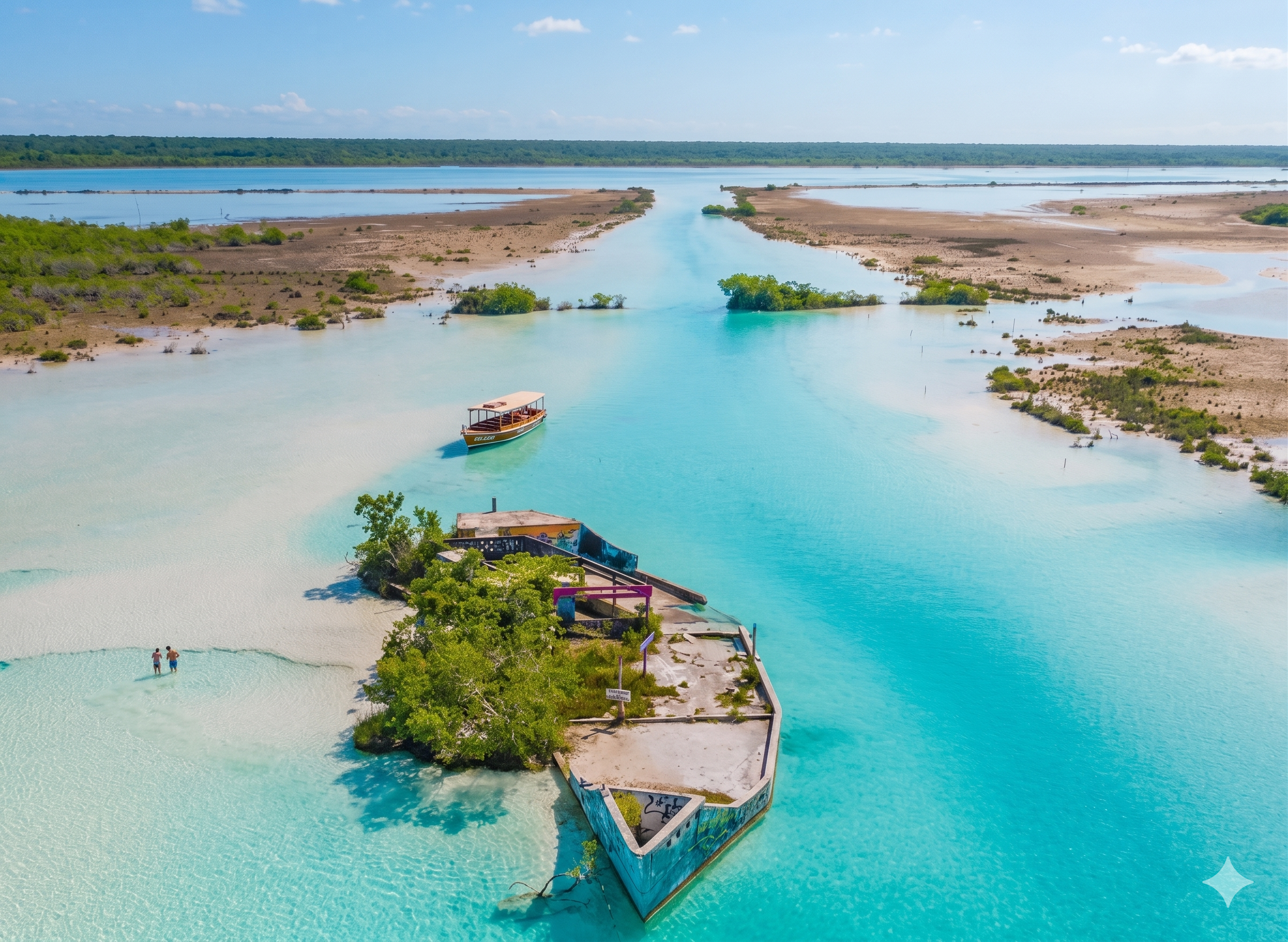
Pirates Channel
Historic strait where formations contrast against white sand and vivid turquoise waters.
A natural channel linking the lagoon with the Hondo river basin. Lined with stratified stromatolite structures best explored by paddleboard or kayak.

Cenote Esmeralda
A deep lagoon eye where deep emerald blue meets underwater microbial structures.
An open cenote inside the lagoon over 70 meters deep. Massive microbial biothems along its perimeter continuously filter and purify the surrounding water.

Bacalar Rapids
A gentle current channel bounded by the largest continuous stromatolite wall in southern Mexico.
A narrow natural strait creating a gentle "lazy river" flow. Both banks are lined with living microbial reefs. Visitors float safely wearing lifejackets alongside wooden footbridges.
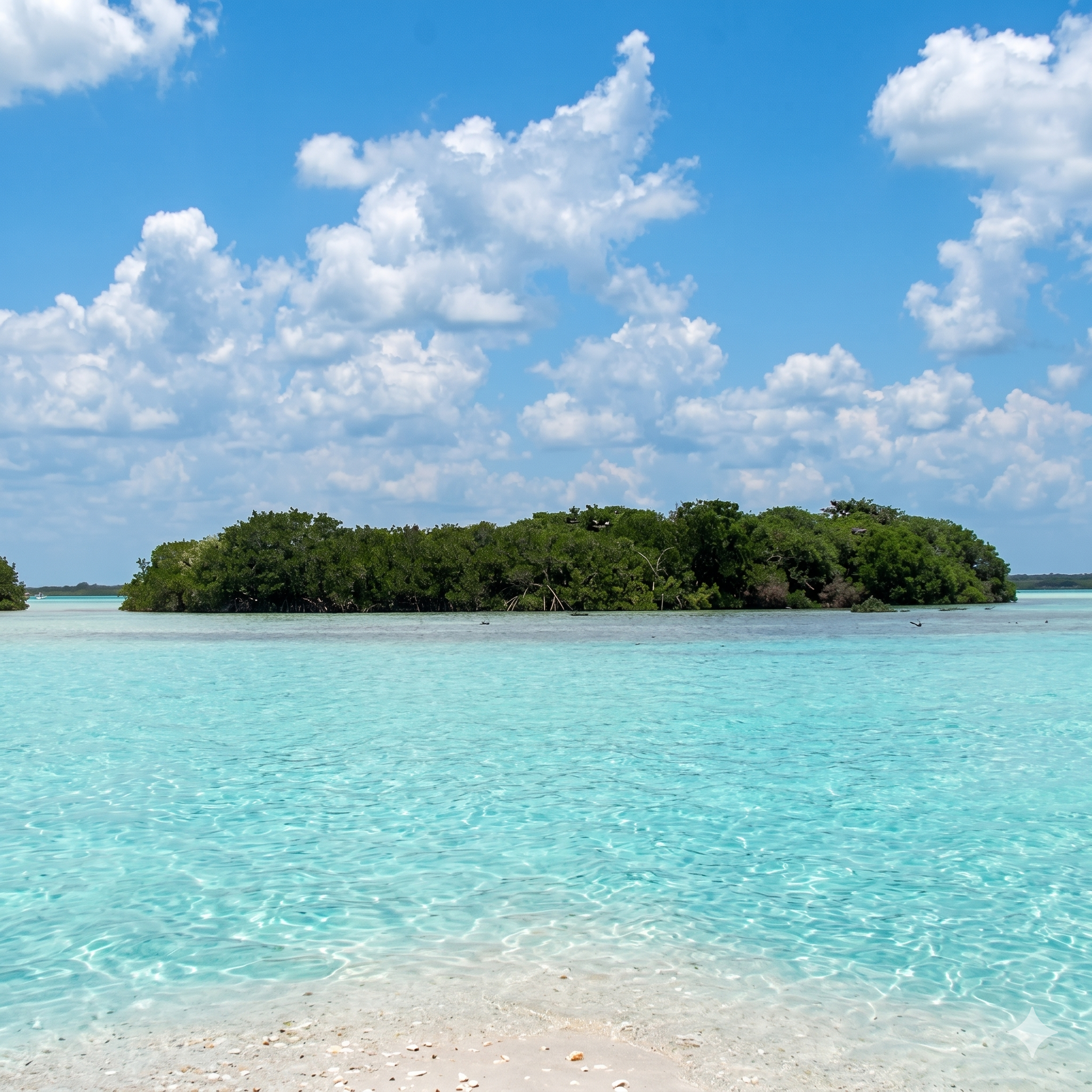
Bird Island & Mangroves
Protected biological belt where stromatolites coexist with migratory bird species.
A submerged microbial platform extends around this small uninhabited island. Motorized boats are restricted to protect bird nesting and fragile calcifying bacteria.
Stromatolite Sanctuaries Around Mexico & The World
Besides Bacalar, only a tiny handful of extremophile ecosystems on Earth sustain active living stromatolites.
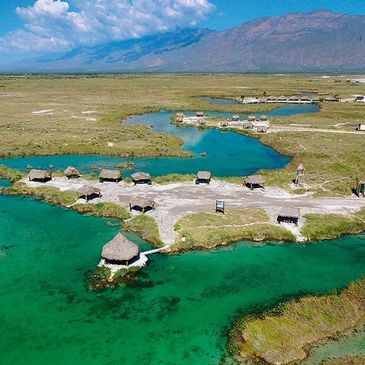
Cuatro Ciénegas, Coahuila (Mexico)
The "Galapagos of the desert": crystal desert pools hosting ancient freshwater stromatolites.
A thermal spring oasis in the Mexican desert where ancestral microbial communities thrive, heavily studied by NASA to model early life on Earth and Mars.

Alchichica Lagoon, Puebla (Mexico)
Saline volcanic crater lake surrounded by a striking ring of hydromagnesite structures.
A high-salinity volcanic crater lake featuring snow-white microbialite reefs formed by extremophile cyanobacteria along its borders.
Shark Bay / Hamelin Pool (Australia)
The world’s most famous and extensively studied marine stromatolite sanctuary.
UNESCO World Heritage site. Hypersaline waters in Hamelin Pool prevent predator snails from feeding, allowing marine stromatolites to flourish unchanged.
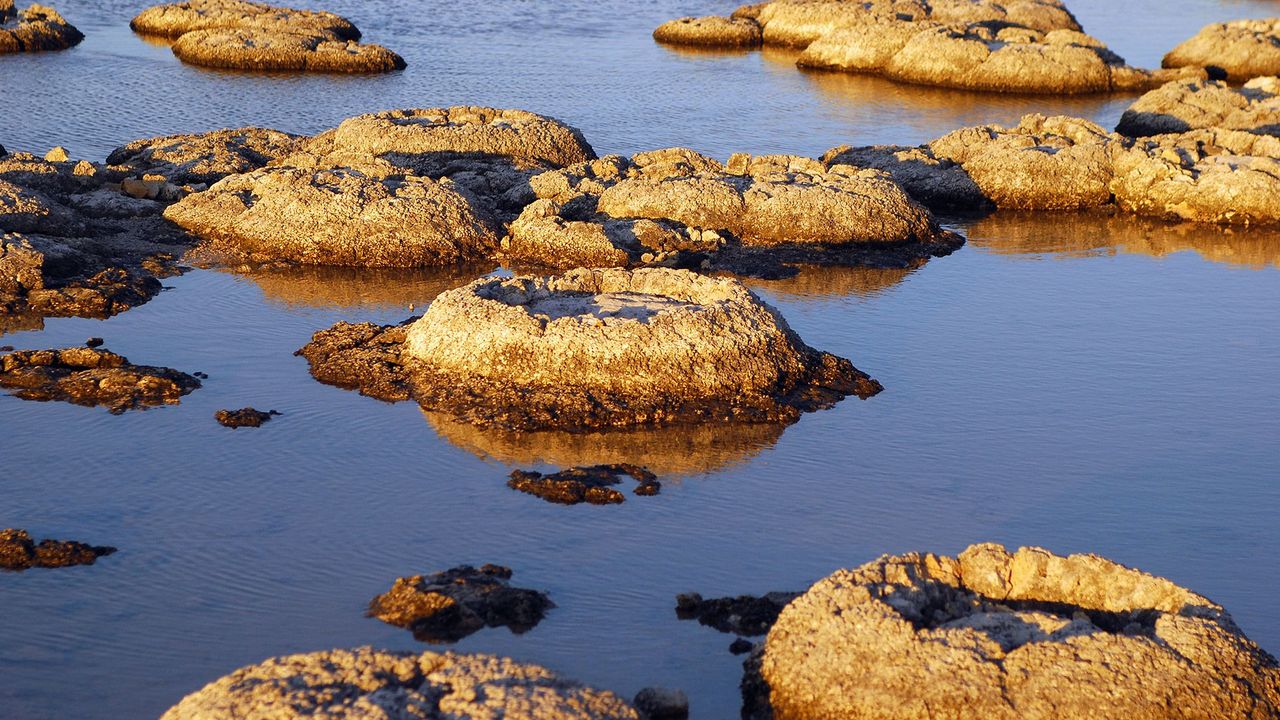
Lake Clifton (Western Australia)
Home to the largest hemispherical thrombolite and stromatolite colony in the Southern Hemisphere.
Located inside Yalgorup National Park, featuring massive thrombolite reef structures nourished by calcium-rich groundwater discharge.
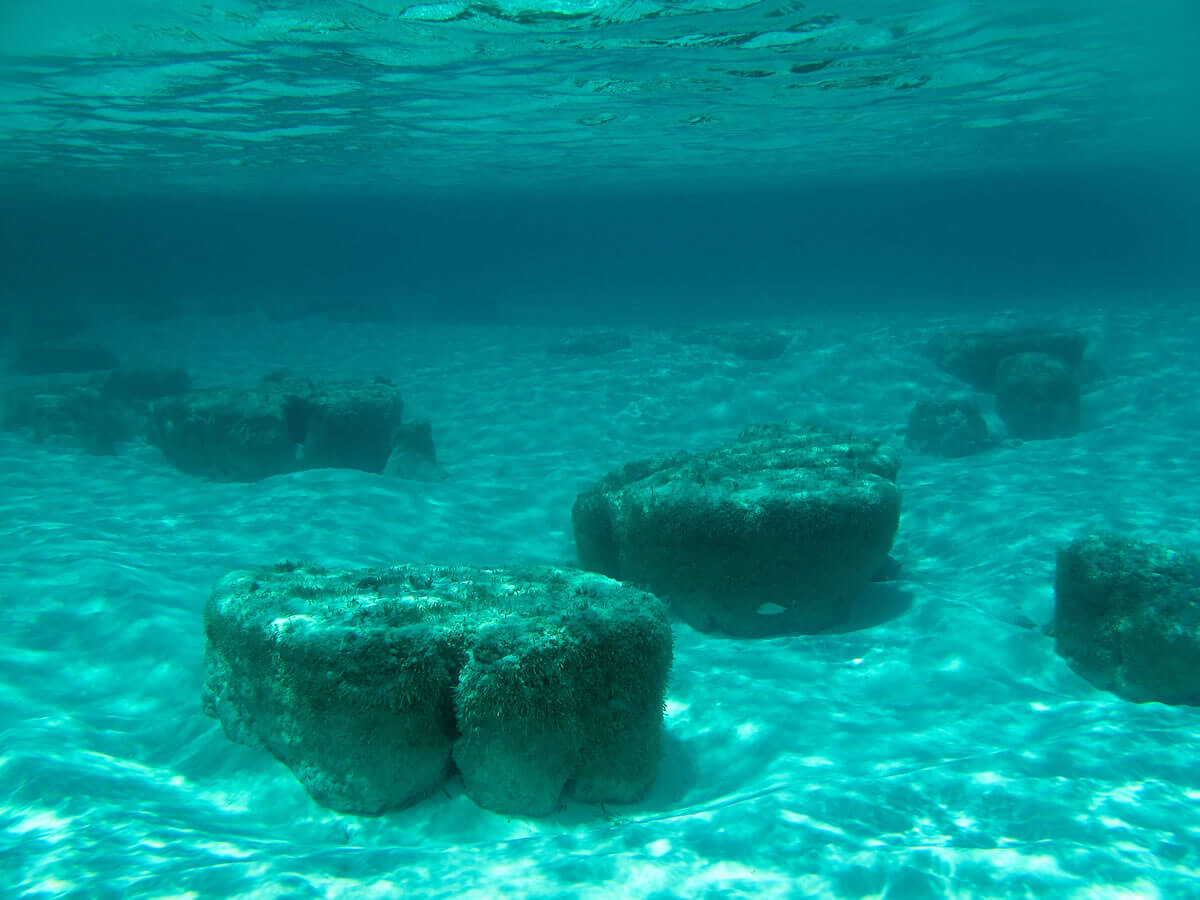
Exuma Cays (Bahamas)
The only modern open-marine reef-building stromatolites in warm Caribbean waters.
Unlike freshwater sanctuaries, Exuma stromatolites grow in open marine intertidal ocean currents along the Bahamas sand banks.
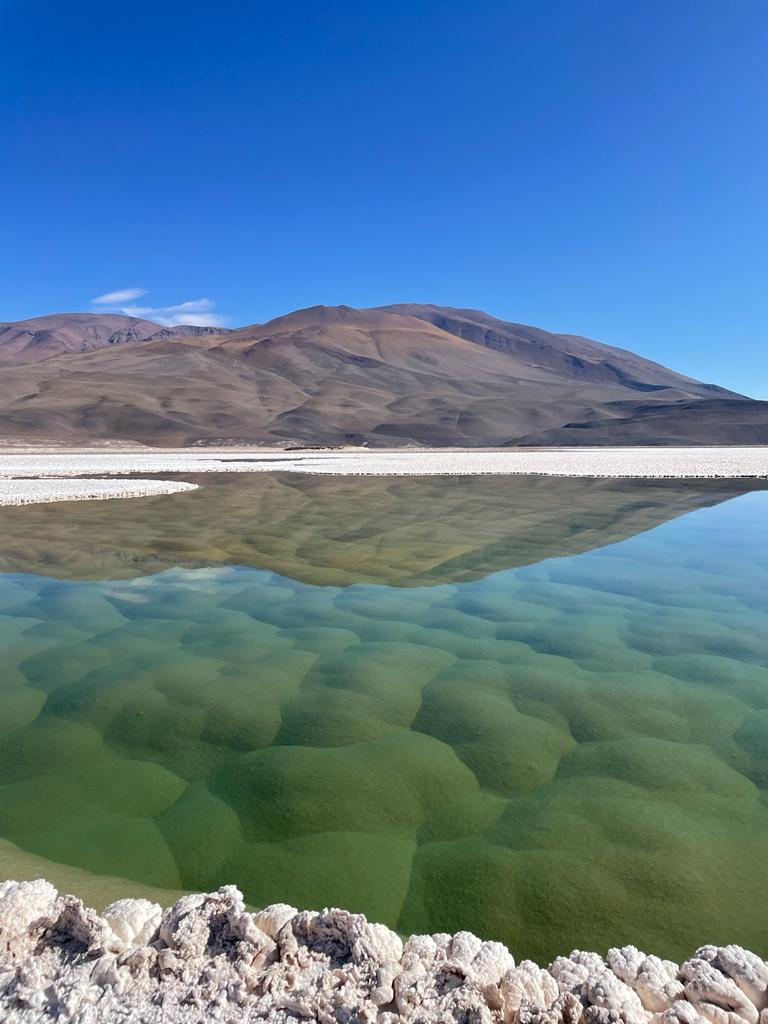
Laguna Socompa (Chile / Argentina)
High-altitude extremophile stromatolites exposed to extreme UV radiation and hydrothermal inputs.
Perched over 3,500 meters high in the Andes, hosting extremophile biothems adapted to thin oxygen and high UV levels, offering scientists a window into primitive Earth.
The Oxygen Epic: 3.5 Billion Years of Life
A journey back in time to understand how microscopic cyanobacteria built our breathable atmosphere.
Dawn of Oxygenic Photosynthesis
Primitive cyanobacteria form sticky mats in archaic seas. Through photosynthesis, they trap mineral sediments, building the first laminated rocky biothems.
Green Code: Responsible Visitor Guidelines
Stromatolites grow just 0.5 mm per year and are extremely fragile. Follow these compulsory rules to preserve them.
Never step, sit, or touch the stromatolites
The outer crust consists of living microscopic bacteria. Stepping on a structure destroys centuries of continuous growth in a split second.
Strictly no sunscreen or lotions in the water
Even "biodegradable" sunscreens release oils and chemicals that suffocate cyanobacteria. Wear long-sleeve UV rashguards instead.
Honor ecosystem rest days — Mondays closed
Key sanctuaries like Cenote Cocalitos and Los Rápidos close every Monday to allow the water to clear and lower human pressure.
Keep safety distance while swimming and photographing
Float at least 1 meter away. Never rest your feet, fins, or selfie sticks against the delicate living rock edges while swimming.
Recommended Eco-Tours for Sustainable Visiting
Experience the stromatolites safely via regulated guided eco-tours led by local experts.
Book Eco TourFrequently Asked Questions About Stromatolites
They are neither inanimate rocks nor animals. They are living microbial reefs (living fossils) built millimeter by millimeter by cyanobacteria colonies fixing calcium carbonate.